In today’s fast-paced business world, it’s essential to foster cohesion and communication between team members. Management games are an excellent way of strengthening team spirit while developing the adaptability skills crucial to business success. In this article, we take a look at different aspects of management games in teambuilding and how to make the most of their potential.
What is a management game?

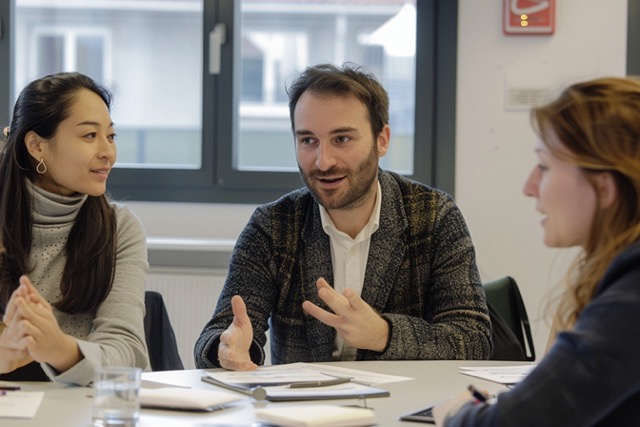

A management game is a type of game involving the management of an organization, usually fictitious, with a precise objective to achieve. The player, or in the case of teambuilding, the team, must make strategic and financial decisions to optimize its resources and achieve its objectives. Management games cover a wide range of sectors, including industry, finance, transport, the environment and health.
These games are particularly interesting when it comes to bringing together and motivating a work team, because of the group dynamics they generate and the skills they require of participants. By setting common challenges, they create bonds between employees, improve mutual understanding and foster a strong team spirit.
Why choose a management game for your teambuilding?
Management games are a wise choice for companies wishing to foster team cohesion and develop essential skills in their employees. Here are just a few of the advantages of these games:
- Stimulate creativity: faced with the challenges posed by the game, participants will have to demonstrate their inventiveness and come up with innovative solutions to achieve their objectives.
- Develop analytical skills: a good management game requires decision-making based on in-depth reflection, while taking into account various elements (finance, human resources, technical aspects, etc.).
- Teamwork: team members need to exchange and share ideas to move forward in the game, reinforcing their ability to listen and empathize with their colleagues.
- Encourage collaboration: management games are designed to be played as a team, forcing participants to work together and delegate certain tasks to optimize game flow.
Examples of management games for teambuilding
Business simulation game
This type of game puts participants in the shoes of a company director who has to manage all the day-to-day aspects of his or her organization. In particular, they have to make decisions about production, pricing, recruitment and marketing strategy. This type of game allows team members to come face to face with real-life business issues and develop their sense of responsibility.
Puzzle-solving games
In this type of game, participants are confronted with problem situations or enigmas which they must solve together. Puzzles can take different forms: logical, numerical, graphical, etc. Success will depend on the group’s ability to communicate effectively and pool everyone’s skills.
Project management game
For this type of exercise, employees will have to carry out a fictitious project with a precise objective to achieve, and time and budget constraints to respect. Teams will have to draw up a comprehensive action plan, anticipate obstacles and adapt to unforeseen circumstances that may arise during the course of the game. This kind of exercise is perfect for working on initiative, time management and adaptability.
Tips for optimizing the teambuilding experience with management games



To get the most out of your teambuilding activity based on a management game, here are a few tips to keep in mind:
- Adapt the level of difficulty: make sure you choose a game suited to the skills and knowledge of the participants. A game that’s too simple won’t offer enough challenge, while one that’s too complicated may discourage employees.
- Vary the themes: offer games that touch on different business sectors or types of management to stimulate participants’ interest and enable them to diversify their skills.
- To ensure a successful experience, it may be useful to call on a facilitator experienced in teambuilding and management games. He or she will be able to guide participants through the process and create a climate conducive to cooperation.
- Leave time for debriefing: at the end of the game, take the time to discuss with team members what they have learned and how they can benefit from this experience in their daily work.
Whether you’re looking to strengthen cohesion within your team, develop new skills or simply offer your employees a fun and convivial moment, management games are an excellent tool for enriching your teambuilding activities. So don’t hesitate, take the plunge and discover for yourself the benefits these games can bring to your company!